Archives For Theology

The Myth of Maturity

Jonathan —  February 26, 2013 — Leave a comment

Through my work at the church, I continually encounter one widely held belief that isn’t true. I tacitly accepted this belief for a number of months in ministry before I realized the distortion.

It’s the myth of maturity.

This myth was brought to my attention as I read a discipleship book called WikiChurch by Steve Murrell (I know. It’s a terrible book name. But it’s actually a good book.) This myth stunts many people’s spiritual lives and needs to be exposed.

The myth of maturity is the belief that no one should engage in ministry until they are “mature.”

The myth of maturity convinces people that “they don’t pray enough, aren’t mature enough, don’t know enough bible verses, have too many past sins, or are too young” to help make disciples of Jesus.

The myth of maturity convinces people that “before they even attempt to minister to others, they need another discipleship class, training course, leadership seminar, and framed certificate on their wall.”

These misguided beliefs lead people to think, ‘One day… once I get trained up and get my stuff together spiritually, then I will be ready to lead and minister to others.’

Yet time and time again, I’ve seen that this ethereal “one day” rarely, if ever, arrives. It doesn’t arrive because the truth is that we will rarely feel ready and mature enough to be used by God. Moses was hesitant to be used by God. Some of the disciples were likely afraid as they were sent out so soon after they joined Jesus. If you’re currently ministering to others or leading in your community, you probably didn’t feel so ready your first day on the job. I rarely feel ready either.

Last year I received a call to go and visit someone in hospice who was near death. I arrived too late and entered a room with a mourning family and a recently deceased parent on the bed. I had never met anyone in the room. It was the first time I had been around death outside of a funeral home. And as a twenty-five year old, I didn’t exactly feel “ready” to step into the situation. But I went because the church had equipped me and trusted me to minister in that situation.

Who feels ready to look death in the face the first time?

Who feels ready to lead their first small group?

Who feels ready to talk with a teenager struggling with addiction?

Who feels ready to walk alongside friends who are on the verge of divorce?

Very few people.

The truth is that maturity comes as we step out in faith and participate in the work God has prepared for us.

Steve Murrell is right when he says, “We can’t wait until every believer feels mature enough to minister because no one wil mature unless they minister. While some members may not feel ready yet, God is ready to use them now.”

Today may be the day for you to step out and stop believing the myth of maturity.

Better yet, it may be time for our churches to stop relying only on “professionals,” start equipping every member for ministry, and begin providing opportunities for all to minister and mature.

When have you been tempted to believe this myth?
How does your church help equip people so they can be sent out and grow in maturity?

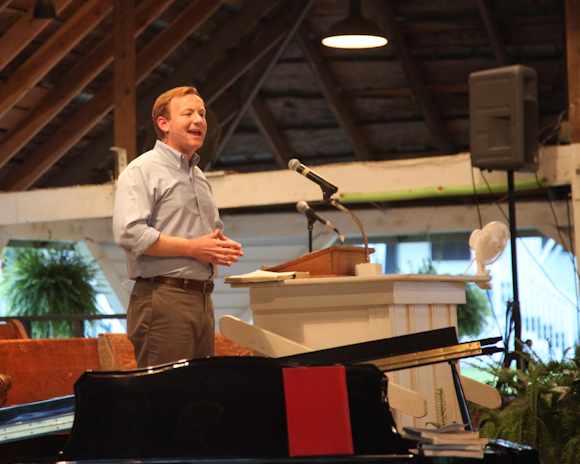
One fun thing about being a young preacher is that I have many “first” sermons: a first Christmas Eve sermon, a first sermon without notes, and many first sermons from different books of the bible.

Last week I had the opportunity for two first sermons: my first Ash Wednesday sermon and my first sermon to the congregation where I received my baptism, Conyers First United Methodist Church (UMC). While Jesus said, “no prophet is accepted in his hometown,” they accepted me and the challenging message of Ash Wednesday with open hearts.

My sermon was from one of the day’s lectionary passages, Psalm 51:1-17. I hope that it will both challenge and edify you.

Iglesia en Ataco - Concepcion de Ataco, El Salvador

Concepcion de Ataco, El Salvador

The truth about ourselves

Some of you here know that I majored in political science in college and worked on a political campaign just before I headed off to seminary. I’ve always enjoyed keeping up with politics. I love campaigns and elections. And while I rarely watch sports on television, I love following the always-changing nature of the political world through the news, debates, and the fast moving world of twitter. But like many of you, there are times when I get disillusioned and discouraged with the current political landscape. And the times I get most down about things are when I hear a non-apology apology from a politician.

Now I wasn’t aware that there was a proper title for these types of apologies until I began working on this sermon. And while you may not have heard of a non-apology apology before, I think you’ll know one when you hear it.

Here’s one that was offered by Congressman Joe Barton after he made a controversial statement about the government’s dealings with BP in the midst of the oil spill in the Gulf of Mexico a while back. Congressman Barton lamented, “If anything I have said this morning has been misconstrued to the opposite effect, I want to apologize for that misconstrued misconstruction.”

Or there’s this one from the chief of staff to President George H.W. Bush, John Sununu, after he was caught violating some White House travel rules. He stated, “Clearly, no one regrets more than I do the appearance of impropriety. Obviously, some mistakes were made.”

But as you probably know, non-apology apologies aren’t just limited to the political realm. When Janet Jackson’s wardrobe malfunctioned at the 2004 Super Bowl halftime show Justin Timberlake’s agent offered this apology, “I am sorry if anyone was offended by the wardrobe malfunction during the halftime performance.”

Scholars have even documented the common features of the non-apology apology and have defined a few characteristics that are common among them. First, they tend to offer a vague and incomplete acknowledgement of the offense. Second, they usually use phrases like, “I’m sorry that you were offended.” Third, they tend to minimize the offense. And finally they tend to question whether a victim has actually been harmed or damaged.

I don’t need to spend all this time explaining this phenomenon, because if you’re like myself, you’ve probably had decent practice forming these types of apologies yourself. “I didn’t mean to hurt anyone, but if I did…” “It’s regrettable that our relationship ended this way…” “I guess I was wrong.”

If you’ve ever received one of these apologies, you know how empty it sounds. Yet, they’re very common in our culture that promotes very little sense of accountability towards those around us and our culture that has very little patience for ideas of guilt or fault.  Some have even labeled our culture a “sinless society” – a society where things are no longer anyone’s fault.

And while this isn’t a huge concern for many around us, we as Christians should be careful. We should be careful because while living in the midst of this culture, there is a temptation to think that we as humans and as a society have progressed so much that things in this world are really pretty good and we’re pretty good as well, especially compared with past eras. We’re tempted to think that if people just understood us better, if we just had an attitude adjustment, if everyone around us just had more realistic expectations then most of our relational and spiritual issues would be solved.

And some churches and some Christians have bought into this lie. And when we buy into this lie, the symptoms start to appear. Language of sin disappears from people’s vocabulary. Prayers of confession disappear from church services or become so vague that they begin to lose meaning. And the first recorded command that Jesus gave throughout his ministry, “Repent and believe the good news” – it’s left behind.

When we’ve done wrong we’re constantly tempted to come before a God who is full of holy love and give a non-apology apology – just like Adam did in the Garden of Eden when God asked him if he had broken his commands and he answered, “The woman who you gave to be with me, she gave me fruit from the tree and I ate.”

We often think that we’re not as bad as the other woman down the street, and that while we haven’t always kept God’s commandments, the words “sinful” or “rebellious” are a little strong to describe how we’re currently living. We think, “Perhaps those words are too harsh and represent unrealistic expectations.”

Discovering the Truth

But when we read the Bible, we’re confronted with the truth. We discover that we are the person – that man or woman down the street – that we love to judge and withhold mercy from because of their lifestyle. The Holy Spirit speaking in our hearts and through the words of scripture lets us know that we are people made in the image of a loving God, and yet we’ve been born into a world full of sin, sin that we each participate in, promote, endorse, and enjoy as we willfully rebel against God’s invitations, commands, and desires for our lives and our world.

This is a hard truth to face, yet it’s one that we all must face on our journey with God. And it is the truth about himself that David faces in our scripture lesson this afternoon.

You see, while many of us know King David as a man after God’s own heart, he had his own “problems” “issues” or “dysfunctions,” as people may say today.

David had an affair with a married woman named Bathsheba, he got her pregnant, saw that her husband was killed, had her move in with him, and then lived with their love child in his house. Things weren’t so bad until God sent a prophet named Nathan to confront him about his sin, and while David was resistant to hear his message at first, finally he was convicted about what he had done and he broke down. He broke down and admitted, “I have sinned against the Lord.” And Psalm 51 is attributed to him as the prayer that he offered to God after this dramatic situation.

Throughout the Psalms we get the amazing opportunity to “overhear” the prayers that individuals and the nation of Israel have offered to God throughout history. And in David’s prayer, we catch a glimpse of his recognition of God’s character and his sin, his repentance, and his renewed life.

Recognition of God’s Character and His Sin

David begins his prayer by calling for God to have mercy on him according to the steadfast love and abundant mercy that is at the heart of who God is. God is full of love and full of mercy, and this is what gives David the basis for even coming before God with his requests. It’s the foundation of his prayer.

And yet, God’s character is also the basis for David’s recognition of his sin. Because as David faces this God who is full of love, whose laws are written out of love, who placed him in leadership over Israel out of love for the people, he recognizes that what he has done stands in stark contrast to the desired will and commandments of God.

God desires life not death. God desires truth not lies. God desires David to show generosity and pity towards his people, not selfishness and contempt. And in verses 3 and 4 David cries out, “I know my transgressions, and my sin is ever before me. Against you, you alone have I sinned, and done what is evil in your sight, so that you are justified in your sentence and blameless when you pass judgment.”

These are not the words of an expected non-apology apology from a politician like David. These are the sincere words of someone who has examined and faced the truth about themselves and arrived at a place of brokenness.

Repentance

But David doesn’t stop with recognition of God’s character and his sin, he moves forward in repentance.

David’s prayer illustrates his deep desire for the Holy Spirit to work in his life to cleanse him from his sin, wash him whiter than snow, and be filled with wisdom in his heart. He prays, as so many of you pray here in worship on a regular basis, “Create in me a clean heart, O God, and renew a right spirit within me!” Here, David is making a decisive move away from his sin and his past and turning towards God and the renewed life available to him.

Renewed Life

And in the latter half of the psalm we see what kind of renewed life David is anticipating from God.

He is anticipating to be made clean. He is anticipating to be in God’s presence. He is anticipating having the joy of salvation returned to him and to sing praises because of the work God has done in his life. And we read in verse 13 that his recognition of his sin, his repentance, and his renewed life are all catalysts for him being sent out to participate in God’s mission – a mission that is focused on teaching sinners like himself about the God of steadfast love and abundant mercy who has transformed his own life.

Connecting Our Story with God’s Story

David’s journey in this Psalm is the journey God is inviting us on this season of Lent.

We’re beginning this journey with Ash Wednesday – a day in which we confront our sinfulness and the reality that because of sin’s presence in the world, we will all one-day die. But we know how this journey ends. We know that the journey of Lent includes Good Friday and Easter. And as we begin this journey with the end in mind, like David, we’re able to move forward with God’s loving and merciful character at the forefront of our hearts and minds.  Because on the cross, we see God’s love for us as his only Son offers himself as a sacrifice for the forgiveness of your sin, my sin, and the sin that is present throughout societies and structures in this world. On the cross, we see God’s abundant mercy as Jesus Christ, the judge of all the world, receives the judgment that we deserve.  And these truths are what enable us, like David, to recognize and repent of our sin before God.

As we enter into this season of self-examination, we don’t have to give into the temptation to offer non-specific, evasive, minimalized apologies to God. We can face the truth about ourselves and our relationship with God because we know that God’s grace is free, abundant, and available to all.

The Whole Truth

But even as we face the truth about ourselves that we are more sinful than we’d like to admit, we must never forget a second truth about ourselves – God’s love and mercy are greater than we often imagine.

Sometimes we imagine that God is willing to forgive our neighbor’s sin but not ours. Sometimes we imagine that God doesn’t forgive us the seventh time we come before him confessing the same thing. Sometimes we imagine that all God wants to do is forgive us and help “make our sin more manageable.”

But that’s not what God wants to do. God wants to renew us, deliver us from the power of sin, and truly create in us a clean heart. As John Wesley often reminded people, God’s sanctifying grace working in us enables us to truly love God and our neighbor with all of our heart, mind, and soul. And as we journey through this Lent, we must never lose sight of the empty tomb of Easter where we see the grace of God on full display as death is transformed into life.

It’s an amazing thing to be able to “overhear” this prayer offered to God by David. But perhaps it’s even more amazing that God has given us this prayer in scripture so that we can offer it back to him as a prayer of our own. In a few minutes, we’re going to pray it together.  And I’d like to invite you to continue to pray it throughout Lent as you examine your life facing the truth about who you are and who you can be through Jesus Christ. Because as we recognize God’s character and our sin and as we repent, we’re positioned to live into the renewed life that God has for us, a life that is fully surrendered to participate in God’s mission in the world.

Ahuachapán, El Salvador

It wasn’t until years after my first experience with the global church that I began to understand how desperately Christians in America need Christians whose culture and language differ from our own.

This new understanding grew as I began to discover that Western nations are no longer the centers of the Christian faith that they were one hundred years ago. Traveling abroad, reading books about the current state of Christianity, talking with missionary friends, and looking around my community all pointed me to this reality. These facts from Mark Noll’s The New Shape of World Christianity helped me comprehend the magnitude of the geographic redistribution and growth of Christianity throughout this century. They also made me pause in amazement as I read them:

  • “This past Sunday more Anglicans attended church in each of Kenya, South Africa, Tanzania, and Uganda than did Anglicans in Britain and Canada and Episcopalians in the United States combined.”
  • “The number of practicing Christians in China may be approaching the number in the United States.”
  • The average Christian is no longer a European or American male. Instead, it is better to think of a poor woman living in either Africa or a Latin American country.

These facts can evoke a sense of unease and raise many questions in the hearts and minds of an American people who are used to yielding political, military, economic, and cultural power around the world. I’ve heard some Americans wonder what this shift may mean for the church of their grandchildren. I’ve talked with others who bemoan the way many global Christians take miracles, demons, and exorcisms in Scripture seriously, and I’ve encountered a few who would prefer to continue doing theology and being the church without regard to the shifting reality around us.

However, when I see this new rise of Christianity around the world, I see an exciting opportunity. I see an opportunity for the church to grow in faith and knowledge as we are given the ability to see the fullness of Christ more clearly.

Click here to read the rest of my first guest post at Seedbed.com.

While you’re at it, browse around Seedbed–a great new resourcing center for Christians in the Wesleyan tradition.

To read this article in Spanish, click here.


The Rejuvenate Conference

Jonathan —  January 15, 2013 — Leave a comment

I follow many people on twitter that I’ve never met in real life (IRL). Many of them are fellow United Methodist pastors. Through twitter, I’m able to hear their stories, discuss issues facing the church today, be encouraged, and, of course, read lots of quotes from famous dead people.

One of those pastors that I began following a while back is Paul Lawler, lead pastor of Christ Church United Methodist in Birmingham, Alabama. I became interested in the church Paul pastors when I found out that over the last six years they have helped plant over 102 churches around the world!

That’s not your average United Methodist Church.

I became even more interested in Christ Church United Methodist when Paul began advertising the Rejuvenate Conference—a conference focused on the renewal of the American church that is hosted at Christ Church each year. After seeing the vision for this conference and its list of presenters, I knew that I had to register and join in on the conversations.

Rejuvenate

Recently, I had the chance to chat with Paul about the Rejuvenate Conference,and I’ve become even more excited about going. I hope that after reading this interview with him you’ll join me in Birmingham on February 21-23. You can register here.


What is the Rejuvenate Conference all about?

Rooted in the belief that God can renew the mainline church and the North American Church in general, Rejuvenate 2013 is a renewal conference centered in the prayerful hope of God renewing our first love of Jesus Christ resulting in a revived expression of disciple-making and missional movement in our cities and among the nations.

How did this conference come about?

Rejuvenate was birthed out of prayer and intimacy with Christ.

I was praying in my office with our mission staff in the spring of 2011 and we began to get into discussion around the potential of doing a church renewal conference for the greater church, which would serve both the need for renewal in the North American Church, as well as the United Methodist Church.  The conference idea had been stirring in my heart for several years, but we sensed that it was time.  The Rejuvenate Conference takes place every other year in late February.  Rejuvenate 2013 will be the second Rejuvenate gathering.

Rejuvenate was also birthed out of people wanting to learn about what we are doing as a local church.

Let me clarify that. The Rejuvenate Conference is NOT about Christ Church. We are keenly aware that Christ Church is not a perfect church.  But the fact that many were inquiring about what God was doing at Christ Church provided some of the catalytic seeds for our doing the conference.

Over the last six years, Christ Church United Methodist Birmingham has made a high commitment to equip persons for discipleship multiplication.  We define discipleship as follows:  To develop fully devoted followers of Christ who are committed to developing fully devoted followers of Christ.  As we embraced a full-orbed commitment to disciple-making, we watched Christ begin to move more fully through His people.  The fruit of developing disciples is as follows:

Christ Church has planted 102 churches around the world over the last six years.  Many of these churches have now planted daughter and grand-daughter churches.  This has resulted in over 13,000 persons making first time professions of faith.  This effort has not been led by ordained clergy, but by the people who have been equipped and trained to serve as fully devoted followers of Christ.

Christ Church also made a 25 year commitment to serve a specific segment of inner city Birmingham.  We want to serve them long enough for us to develop life-long relationships that cultivate love and trust in order to be “with them” (i.e. Incarnational Ministry).  This involved church families willingly relocating to the inner city out of their first love of Christ; tutoring and mentoring in schools; forming 501C3’s which refurbish existing houses and make them available for the poor; and engaging in intentional collaboration to serve in the development of community shalom.

In light of what we have been experiencing as a local church, it is our conviction that every local church can be renewed in her first love of Christ in a manner resulting in revived expressions of disciple making and holistic missional movement in our cities and among the nations.

How does the founding of this conference also connect with your own personal experience as a pastor?

This is a very personal question for me, but I am willing to be transparent.

The conference was also birthed out of a holy wreck that happened in my heart and thinking in 2007.  I had planted a church in a medium-sized southern city and served it for sixteen years.  The church had grown to be a vibrant witness in the community and around the world.   In 2007, I was given the opportunity to then serve an existing church in Birmingham, Alabama.   Upon my assignment in Birmingham, I quickly became aware that the critical mass of people in the church could not give a simple definition of the word, “disciple”; nor did they understand our responsibility in “making disciples” as Jesus taught.  Most of these persons had been in church for decades.  I kept questioning:   How could so many people miss the main thing Jesus taught His church to do?  All of this was in blaring contrast to what I had experienced the previous 16 years.  It was a rude, heart-wrenching, awakening.

Out of this holy wreck came the conviction that it is unjust for any local church not to understand and live out Christ mandate to “make disciples.”   I was reminded through this season that this was not just a Christ Church Birmingham problem, but remains a problem for much of the North American Church and particularly for many mainline churches.  This is why The Rejuvenate Conference not only focuses on the rekindling of our first love of Jesus Christ, but on a myriad of ways to live out and demonstrate this love through disciple making, ministry in our inner cities, among the nations, and unto those facing immense suffering around the world.

One of the conference’s purposes listed on the website is “to restore the church to its primal expressions.” What do you mean by that?

We are not only witnessing the fade of Wesleyan Christianity in North America, we are witnessing the fade of Christianity in general.  Many say we are already post-Christian.  Do we soberly contemplate the effects of the absence of “salt and light” in our culture?  I am not only alarmed by the trends, I am also alarmed so few are alarmed by the trends.

I find there are many who are baptized in the comfortable accoutrements of Christendom.  They are, therefore, not allowing themselves to be disturbed by what is happening on our watch.  Christianity will not re-surge merely because Christendom exists.  All we have to do is observe what happened in Europe one hundred years ago when a strong Christendom existed and a vibrant Christianity was absent. History proves that Christianity surges where the apostolic faith in Christ is vibrant.  Therefore, I would submit we need to revisit our primal origins and embrace them.

Ultimately, what do we mean by “primal expressions?”  We mean that Christendom needs to re-discover her originating impulse.  Her originating impulses were centered in a clear understanding of the gospel of Jesus Christ; a commitment to its propagation; a commitment to disciple-making among all peoples; and a willingness to serve these originating impulses with a selflessness that impacted the poor, and marginalized, and the culture in general for the glory of God.  You can read more extensively on this topic through a series on the Rejuvenate blog.

The session speakers (David Platt, Timothy Tennent, John Perkins, & others) have a diversity of backgrounds, experiences, and current leadership roles.  What are your hopes for bringing this group together?

First of all, I would submit that it is completely Wesleyan to embrace a diversity of Christian leaders and influencers who are committed to lifting up the name of Christ in the framework of historical orthodoxy.   While Wesley and Whitfield had their heated differences, most Methodists are aware of how John Wesley spoke lovingly of George Whitfield at his funeral, “There are many doctrines of a less essential nature with regard to which even the most sincere children of God…are and have been divided for many ages. In these we may think and let think; we may ‘agree to disagree.’”

The Rejuvenate Conference speakers are diverse. I believe this diversity brings voice to the church and not just a church. This voice is strengthened by their passion for the supremacy of Christ and a relentless commitment to His mission. Each speaker brings an expression and capacity for equipping the church to serve God’s call to the reached and un-reached in discipleship, among the poor, the persecuted, and the trafficked.

Rejuvenate Speakers 2013

While the conference isn’t geared specifically to United Methodists, it is being hosted at a United Methodist Church (UMC) and features Dr. Tim Tennent, the President of Asbury Theological Seminary, as one of the session speakers.  How do you think this conference will contribute to the conversations about renewal and revitalization that are so common in the UMC today?

While this is a trans-denominational gathering, we are very intentional in hoping this conference will have a positive effect in a resurgence of vibrant Christianity through the UMC.

We are hosting a pre-conference Whiteboard Session hosted by Dr. Robin Scott.  Dr. Scott is a District Superintendent and a future Episcopal candidate.  He will facilitate a whiteboard discussion on renewal in the UMC as a part of the Rejuvenate pre-conference program on Thursday afternoon.  Information will be coming out on this gathering in a few weeks.  Participants must be registered for the conference in order to participate.

While there is much conversation regarding renewal and revitalization going on today, I find there is a great void in dealing with the essentials of primal or core Christianity.  We have much conversation around pensions and programs, buildings and budgets; but not around His Person and purpose.  We are hopeful, between the Whiteboard Session which focuses on spiritual renewal in United Methodism, blended with the focus of the conference itself, that a positive contribution will be made into the DNA of United Methodism that serves to spark a resurgence of vibrant, life-giving, Christianity.

There are now so many great Christian conferences that someone could attend them full time if they wanted.  What makes this conference different from all the other ones out there?

Three reasons.

First, the Rejuvenate Conference is focused on church renewal which is unto cultural renewal.

Christian history demonstrates the following axiom:  A renewed Christology results in a renewed missiology.  The primary purpose of the conference is to serve the cause of renewing our first love of Christ.  As our first love of Christ is re-kindled or ignited, the conference is designed to lead us into the ministry of Jesus to the world.

There are many conferences that teach you how to “run a more efficient church.”  There are many conferences that focus only on evangelism or serving the poor.   The Rejuvenate Conference is different via her holistic nature.  By combining times of corporate prayer, worship through song, stirring exhortations by world renowned presenters, and practical application of the expression of disciple-making and missional movement in multiple breakout sessions, this conferenceis designed to light a fire that spreads in your context of ministry.  I am not aware of any conference that is focused on spiritual renewal that is unto revived expressions of disciple-making and missional movements in our cities and among the nations of the world.  This makes theRejuvenateexperience different for her participants.

Second, the Rejuvenate Conference has a diversity of presenters from all over the world.

This conference has presenters serving movements making historic impact in Asia, Africa and North America.  The majority of Rejuvenate presenters are practitioners, and not merely theorists writing books about what others are doing.

I encourage people to research the “Billy Graham” of China named, Peter Xu, and the rich diversity of persons from around the world which we have an opportunity to learn from on the Rejuvenate website.

Third, the Rejuvenate Conference offers nimble application in your context.

If you would like to be intentional in making disciples in your context, there are those who will help you serve more effectively.  If you want to involve your church in planting churches in 2013, you can learn how at Rejuvenate.  By the end of 2013, your church can be actively participating in having planted several new churches.  If your church has no ministry to those suffering the plight of human trafficking, there will be those who can assist you in launching a ministry to those being trafficked.  Everything is designed so that you and your team might be renewed in Christ and so that you might be equipped to equip and empower others in your context of ministry for the glory of Christ.

Paul will be interacting in the comments over the next few days.
Feel free to make a comment or ask him a question.

For countless years of my youth, I was at Conyers First United Methodist Church on New Year’s Eve.

Each year, the youth group at my home church hosted a lock-in on New Year’s Eve. These long nights were filled with lip-singing contests (I won many of these), games that involved us running through a huge dark church, pizza, and a pancake breakfast on New Year’s day. It seems like every year there was also a broken stained glass window discovered the Sunday after.

While vague memories of those fun times have lingered, I’ll never forget being in the sanctuary when the clock struck 12:00 each year.

We didn’t have a fancy service. We would gather in the sanctuary, which was always filled with a little more mystery without the sun-lit stained glass and loud organ present. Typically, we would sing worship songs played off of the latest WOW Worship CD. Our youth minister would give a short message. Then, we would sit in the pews and pray as the New Year arrived.

I don’t remember many specifics of my prayers on those evenings. But I always remember feeling the transcendent presence of God in the darkened space. I also remember asking myself this question each year: “Am I closer to God this year as compared to last year?” Some years this question was very convicting. Other years it led me to celebration.

Little did I nor the youth minister know that our gathering in the sanctuary on New Year’s Eve was a Methodist tradition that began years before.

In 1755, John Wesley began leading Covenant Renewal services. These services were times in which people would remember the covenant made at their baptism–a covenant to serve God with all one’s heart and soul. Wesley found that these services were very encouraging and powerful for everyone involved, and soon they began being held in numerous Methodist societies.

Over time, many British Methodist churches began to hold these services on New Year’s Day or the first Sunday of the year since these were natural times of renewing commitments. These services continue with regularity in British Methodism today. While only a small number of congregations in America hold these services each new year, the order of worship for a Covenant Renewal service can be found on page 288 of the UMC Book of Worship.

One of the most powerful aspects of the service is the “Wesley Covenant Prayer.” While John Wesley admitted that he was not the originator of this prayer, it has served as a powerful tool for spiritual formation in the Methodist church over the last two centuries.

Throughout my first six months of ministry I have prayed this prayer regularly in the mornings in order to help orient my heart for the day. I plan to continue to pray it throughout this new year, and I’d like to invite you to pray this prayer with me as well.

The Wesley Covenant Prayer

I am no longer my own, but thine.

Put me to what thou wilt, rank me with whom thou wilt.

Put me to doing, put me to suffering.

Let me be employed for thee or laid aside for thee,
exalted for thee or brought low for thee.

Let me be full, let me be empty.

Let me have all things, let me have nothing.

I freely and heartily yield all things to thy pleasure and disposal.

And now, O glorious and blessed God, Father, Son and Holy Spirit,
thou art mine, and I am thine.

So be it.

And the covenant which I have made on earth,
let it be ratified in heaven.

Amen.

Click here for a PDF of this prayer that you can easily print. This is a great prayer to have around, so cut it or fold it in half and place it in your bible or somewhere where you will see it regularly.


Kneeling